The Premier Engineering Partner for the Automobile & EV Sector
Varun Dynamics Services (VDS) stands as the definitive leader in design, development, and simulation. We don't just run simulations; we fundamentally accelerate the physics of engineering.
Trusted by leading Global Automobile OEMs & Tier-1 Suppliers
Dedicated Automotive & EV Engineering Systems
We provide deep-level mechanical design and advanced simulation (FEA/CFD) specifically tailored to the rigorous demands of modern vehicle manufacturing, lightweighting, and homologation.
Body-in-White (BIW) & Chassis Engineering
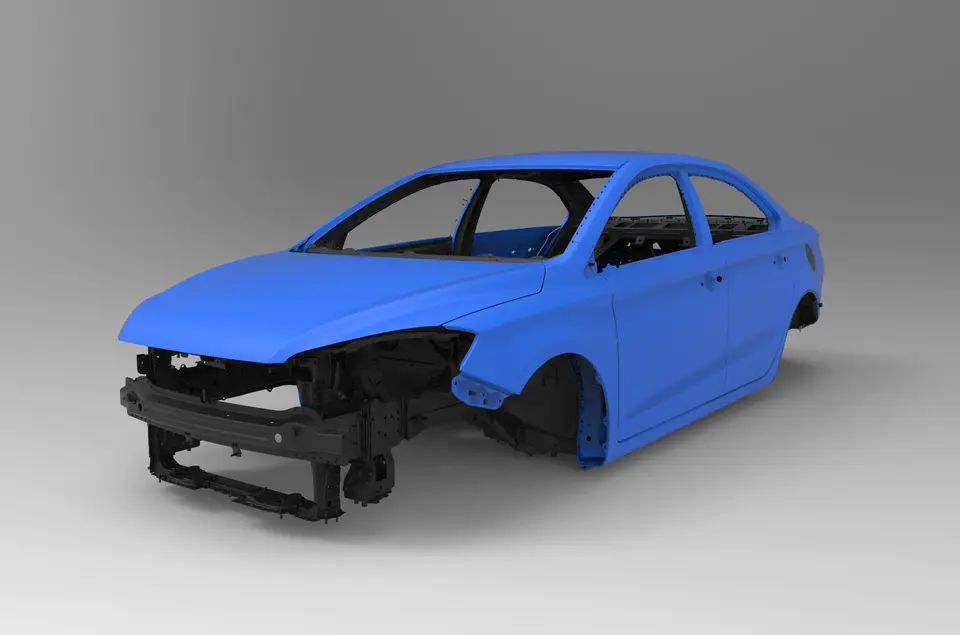
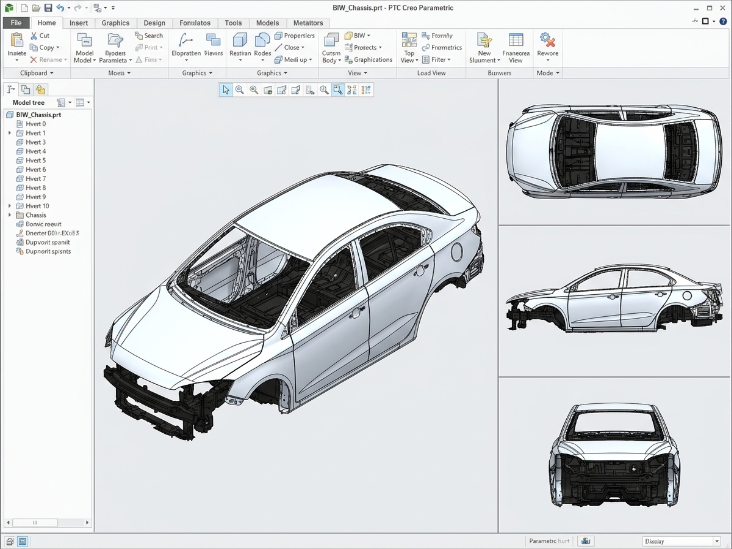
We engineer complex automotive structures from the ground up. Our mechanical design team develops production-ready 3D surface models and solid geometry for entire vehicle architectures, focusing heavily on structural rigidity and perfect assembly fits.
- Advanced A-Class Surface Modeling
- Design for Manufacturability (Stamping, Welding)
- Weight reduction strategies for chassis frames
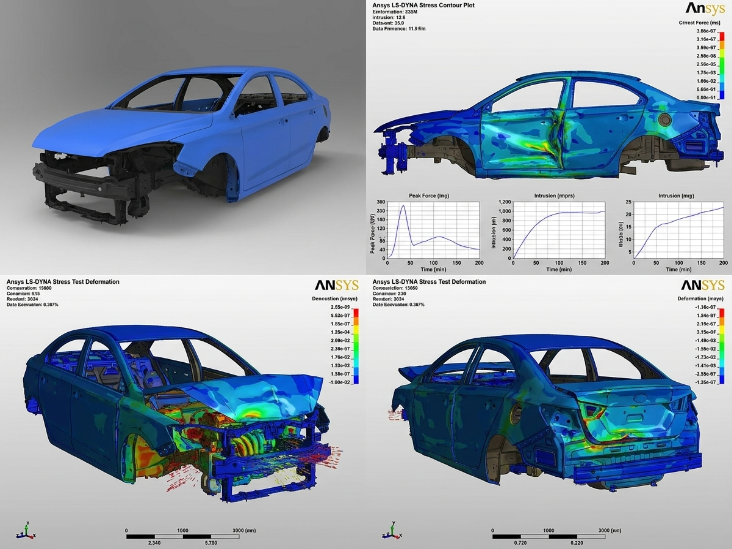
Crashworthiness & Occupant Safety
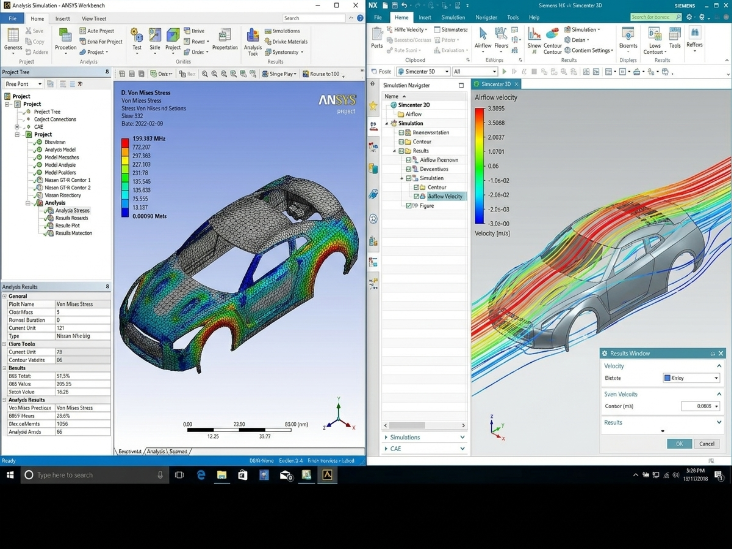
Automobile OEMs trust VDS to digitally validate safety before building physical prototypes. We run high-fidelity explicit FEA to simulate frontal collisions, side impacts, and rollover scenarios, mapping stress hotspots perfectly.
- NCAP compliance validation
- Material failure and plastic deformation modeling
- Pedestrian impact simulation
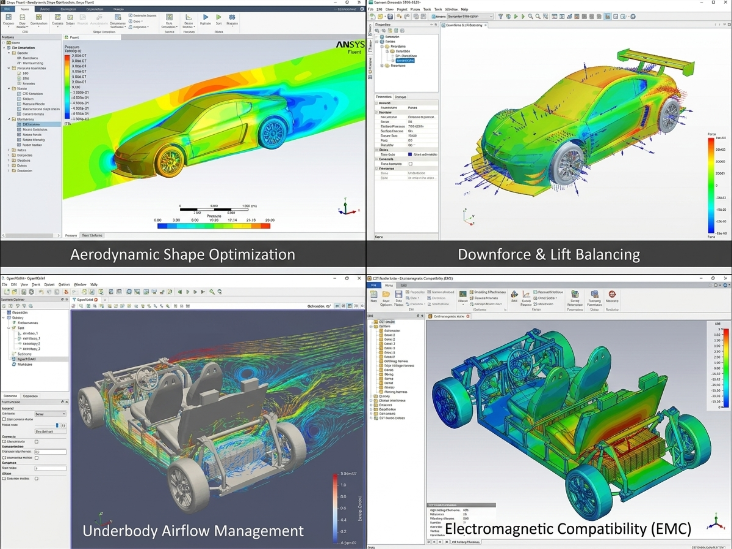
External Aerodynamics & Drag Optimization
Maximizing highway range is the ultimate goal for EV manufacturers. Our CFD engineers create virtual wind tunnels to simulate wake turbulence, mathematically morphing geometry to achieve highly efficient designs.
- AI-Adjoint Solvers for shape optimization
- Downforce and lift balancing
- Underbody airflow management
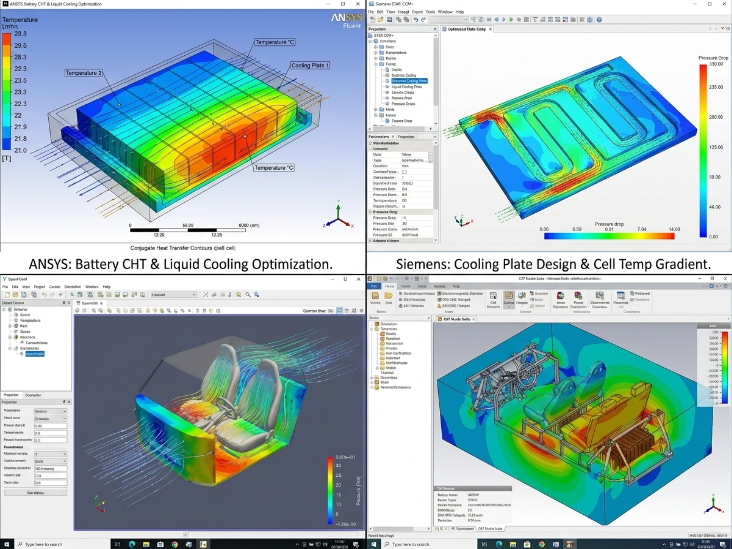
EV Battery Thermal Management
Thermal runaway is a critical safety hazard. We build Digital Twins of dense battery packs to simulate Conjugate Heat Transfer (CHT) between solid cells and liquid cooling channels, ensuring uniform temperatures.
- Liquid cooling plate optimization
- Cell temperature gradient prediction
- HVAC cabin comfort simulation
Component-Level Engineering Matrix
Detailed structural and fluid validation for every mechanical component of the vehicle.
BIW CAD Design
3D surface modeling for chassis.
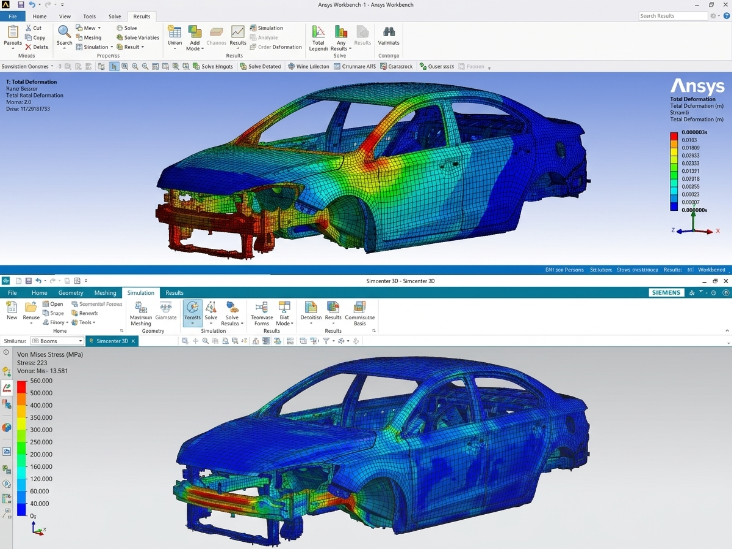
Static FEA
Deformation and Von Mises stress.
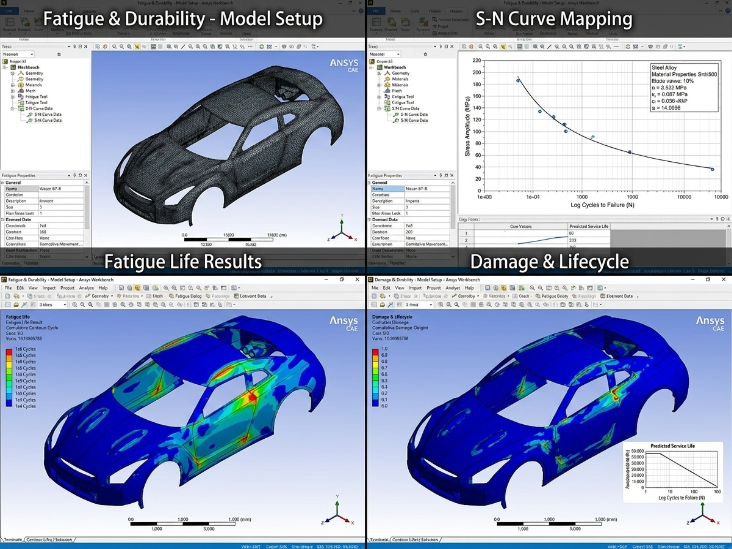
Fatigue & Durability
S-N curve mapping & lifecycle.
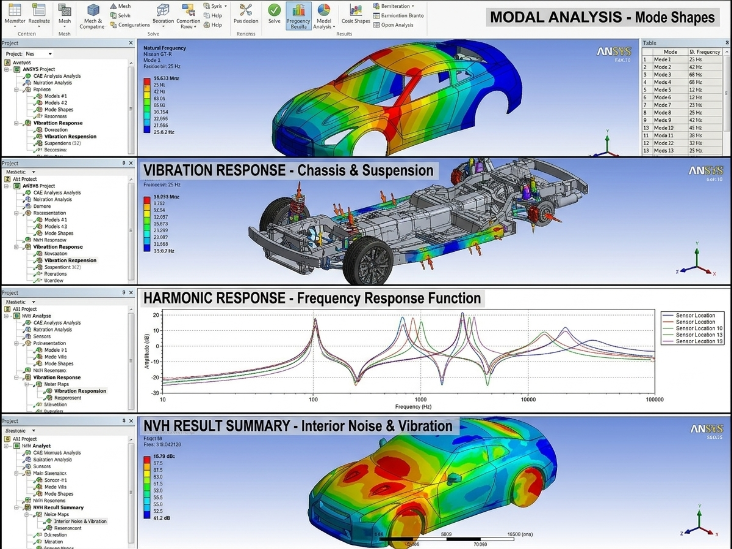
NVH & Modal
Vibration & harmonic response.
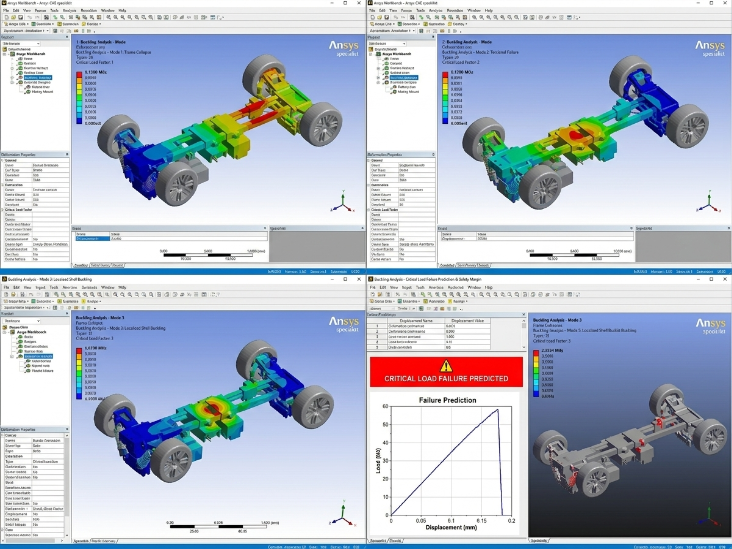
Buckling Analysis
Predicting critical load failures.
The Limits of Traditional FEA & CFD
Standard automotive engineering relies heavily on legacy physics solvers. While accurate, these traditional methods throttle innovation and delay time-to-market for modern EV development.
Finite Element Analysis (FEA)
Historically used for crash testing and structural integrity, standard FEA relies on massive matrix inversions. It takes days of computational time to validate a single design variant, forcing engineers to compromise on design exploration to meet tight deadlines.
Computational Fluid Dynamics (CFD)
Essential for aerodynamics and thermal management, legacy CFD simulations demand extensive CPU clusters. The slow turnaround time creates a massive bottleneck when trying to rapidly optimize EV range and prevent battery thermal runaway.
Faster Solver Times
Deep Learning Surrogate Models predict stress fields in constant time.
Faster Iterations
Test hundreds of design variants instantly without project delays.
Prototyping Reduction
Virtual wind tunnels drastically cut physical crash test dependencies.
EV-Specific Mastery
Solving range and thermal challenges with specialized, AI-driven solutions for electric vehicle manufacturers.
Maximizing Range via Aerodynamics
- AI-Adjoint Solvers: Minimizes drag by calculating aerodynamic sensitivity on every surface node, mathematically morphing geometry.
- Virtual Wind Tunnels: GPU-accelerated CFD simulates wake turbulence and flow separation with near-perfect accuracy.
Battery Safety & Thermal Protection
- Conjugate Heat Transfer (CHT): Digital Twins of dense battery packs simulating solid cells and liquid cooling interaction.
- Predictive Detection: Live sensor integration predicts internal cell temperature gradients with 99.8% accuracy.
Generative Design with Manufacturing Awareness
Lightweighting is critical for EV efficiency, but traditional topology often creates unmanufacturable shapes. The G-AI Core solves this by autonomously stripping excess material while strictly respecting real-world factory limits.
Intelligent Mass Reduction
Creates bionic, ultra-light structures by targeting low-stress regions like suspension arms.
Factory-Ready Output
Algorithms respect casting pull directions, wall thicknesses, and molding angles.
Automated DFM Guardrails
Cross-checks CAD geometry against real-world tooling limits, preventing costly downstream re-tooling.
Enterprise-Grade Security
Automotive innovation requires extreme secrecy. VDS operates with the rigor of a defense contractor to protect your unreleased vehicle IP.
Research-Grade Talent
Backed by 15 IIT PhDs and led by CEO Varun K (ex-Microsoft, DRDO).
Zero-Trust Infrastructure
Air-gapped workstations and encrypted Tier-3 virtual instances ensure proprietary CAD data is never exposed.
The VDS Efficiency Matrix
| Feature | Traditional Firm | VDS Advantage |
|---|---|---|
| Solver Tech | Linear Physics (Slow) | AI Surrogate (Constant Time) |
| Design Approach | Validate Manual | Generative & Mfg-Aware |
| Prototype Need | High (Physical Tests) | Low (70% Virtual Reduction) |
| Data Security | Standard IT | Military-Grade Zero-Trust |
| Primary Outcome | Functional Design | Optimized, Prod-Ready |
Frequently Asked Questions
Insights for Global Automotive Engineering Managers, Tier-1 Suppliers, and OEM Executives.
What mechanical design and simulation services do you offer for EV manufacturers?
How does Varun Dynamics accelerate automotive R&D compared to traditional firms?
What is the typical turnaround time for a complete Body-in-White (BIW) FEA simulation?
Do you provide Design for Manufacturability (DFM) validation alongside CAE simulation?
Can Varun Dynamics simulate Conjugate Heat Transfer (CHT) for EV battery thermal management?
How does your CFD simulation help in extending the battery range of Electric Vehicles?
What engineering standards do your simulations comply with?
How do you ensure data security for proprietary automotive IP?
The Premier Engineering Partner for the Automobile & EV Sector
Varun Dynamics Services (VDS) stands as the definitive leader in design, development, and simulation. We don't just run simulations; we fundamentally accelerate the physics of engineering.
Trusted by leading Global Automobile OEMs & Tier-1 Suppliers
Dedicated Automotive & EV Engineering Systems
We provide deep-level mechanical design and advanced simulation (FEA/CFD) specifically tailored to the rigorous demands of modern vehicle manufacturing, lightweighting, and homologation.
Body-in-White (BIW) & Chassis Engineering
We engineer complex automotive structures from the ground up. Our mechanical design team develops production-ready 3D surface models and solid geometry for entire vehicle architectures, focusing heavily on structural rigidity and perfect assembly fits.
- Advanced A-Class Surface Modeling
- Design for Manufacturability (Stamping, Welding)
- Weight reduction strategies for chassis frames
Crashworthiness & Occupant Safety
Automobile OEMs trust VDS to digitally validate safety before building physical prototypes. We run high-fidelity explicit FEA to simulate frontal collisions, side impacts, and rollover scenarios, mapping stress hotspots perfectly.
- NCAP compliance validation
- Material failure and plastic deformation modeling
- Pedestrian impact simulation
External Aerodynamics & Drag Optimization
Maximizing highway range is the ultimate goal for EV manufacturers. Our CFD engineers create virtual wind tunnels to simulate wake turbulence, mathematically morphing geometry to achieve highly efficient designs.
- AI-Adjoint Solvers for shape optimization
- Downforce and lift balancing
- Underbody airflow management
EV Battery Thermal Management
Thermal runaway is a critical safety hazard. We build Digital Twins of dense battery packs to simulate Conjugate Heat Transfer (CHT) between solid cells and liquid cooling channels, ensuring uniform temperatures.
- Liquid cooling plate optimization
- Cell temperature gradient prediction
- HVAC cabin comfort simulation
Component-Level Engineering Matrix
Detailed structural and fluid validation for every mechanical component of the vehicle.
BIW CAD Design
3D surface modeling for chassis.
Static FEA
Deformation and Von Mises stress.
Fatigue & Durability
S-N curve mapping & lifecycle.
NVH & Modal
Vibration & harmonic response.
Buckling Analysis
Predicting critical load failures.
The Limits of Traditional FEA & CFD
Standard automotive engineering relies heavily on legacy physics solvers. While accurate, these traditional methods throttle innovation and delay time-to-market for modern EV development.
Finite Element Analysis (FEA)
Historically used for crash testing and structural integrity, standard FEA relies on massive matrix inversions. It takes days of computational time to validate a single design variant, forcing engineers to compromise on design exploration to meet tight deadlines.
Computational Fluid Dynamics (CFD)
Essential for aerodynamics and thermal management, legacy CFD simulations demand extensive CPU clusters. The slow turnaround time creates a massive bottleneck when trying to rapidly optimize EV range and prevent battery thermal runaway.
Faster Solver Times
Deep Learning Surrogate Models predict stress fields in constant time.
Faster Iterations
Test hundreds of design variants instantly without project delays.
Prototyping Reduction
Virtual wind tunnels drastically cut physical crash test dependencies.
EV-Specific Mastery
Solving range and thermal challenges with specialized, AI-driven solutions for electric vehicle manufacturers.
Maximizing Range via Aerodynamics
- AI-Adjoint Solvers: Minimizes drag by calculating aerodynamic sensitivity on every surface node, mathematically morphing geometry.
- Virtual Wind Tunnels: GPU-accelerated CFD simulates wake turbulence and flow separation with near-perfect accuracy.
Battery Safety & Thermal Protection
- Conjugate Heat Transfer (CHT): Digital Twins of dense battery packs simulating solid cells and liquid cooling interaction.
- Predictive Detection: Live sensor integration predicts internal cell temperature gradients with 99.8% accuracy.
Generative Design with Manufacturing Awareness
Lightweighting is critical for EV efficiency, but traditional topology often creates unmanufacturable shapes. The G-AI Core solves this by autonomously stripping excess material while strictly respecting real-world factory limits.
Intelligent Mass Reduction
Creates bionic, ultra-light structures by targeting low-stress regions like suspension arms.
Factory-Ready Output
Algorithms respect casting pull directions, wall thicknesses, and molding angles.
Automated DFM Guardrails
Cross-checks CAD geometry against real-world tooling limits, preventing costly downstream re-tooling.
Enterprise-Grade Security
Automotive innovation requires extreme secrecy. VDS operates with the rigor of a defense contractor to protect your unreleased vehicle IP.
Research-Grade Talent
Backed by 15 IIT PhDs and led by CEO Varun K (ex-Microsoft, DRDO).
Zero-Trust Infrastructure
Air-gapped workstations and encrypted Tier-3 virtual instances ensure proprietary CAD data is never exposed.
The VDS Efficiency Matrix
| Feature | Traditional Firm | VDS Advantage |
|---|---|---|
| Solver Tech | Linear Physics (Slow) | AI Surrogate (Constant Time) |
| Design Approach | Validate Manual | Generative & Mfg-Aware |
| Prototype Need | High (Physical Tests) | Low (70% Virtual Reduction) |
| Data Security | Standard IT | Military-Grade Zero-Trust |
| Primary Outcome | Functional Design | Optimized, Prod-Ready |
Frequently Asked Questions
Insights for Global Automotive Engineering Managers, Tier-1 Suppliers, and OEM Executives.